Have You Ever Tasted This Fruit? Discover the Sweet and Nutritious Mulberry 🌿🫐
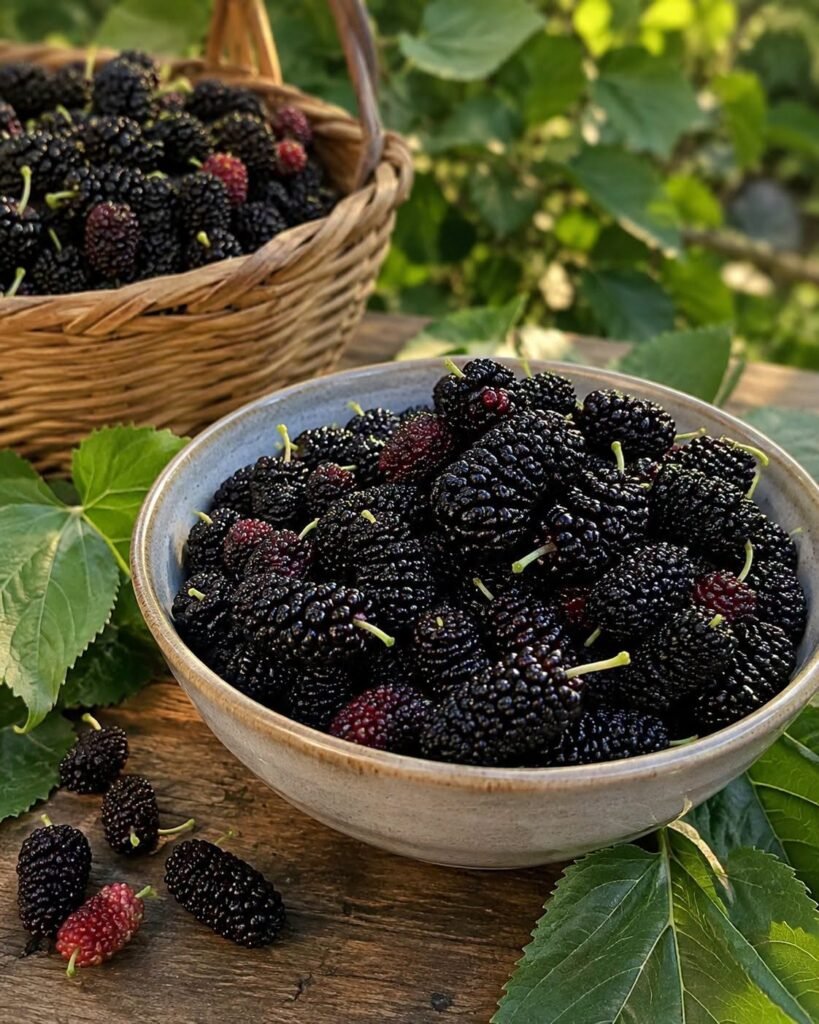
Have you ever seen these dark, juicy berries growing on a tree? They may look unusual, but they are mulberries, a seasonal fruit enjoyed in many parts of the world.
With their naturally sweet flavor and deep purple-black color, mulberries can be eaten fresh, added to desserts, blended into smoothies, or dried for later use.
But what makes this little fruit interesting? Let’s take a closer look.
🌿 What Are Mulberries?
Mulberries are the edible fruits of mulberry trees, which belong to the Morus genus.
Depending on the variety and ripeness, they can range from white and pink to deep red or almost black. The dark varieties shown in the image are commonly called black mulberries.
When ripe, they are soft, juicy, and sweet, with a slightly tart flavor.
💜 What Nutrients Do Mulberries Provide?
Mulberries are relatively low in calories and provide several nutrients, including vitamin C, vitamin K, fiber, and naturally occurring plant compounds.
Their dark color comes partly from anthocyanins and other antioxidant compounds. Antioxidants help protect cells from oxidative stress as part of a healthy diet.
Mulberries also contain potassium and other micronutrients that contribute to overall nutritional intake.
👀 Are Mulberries Good for Your Eyes?
Mulberries contain vitamin C and various plant compounds that are associated with a healthy diet.
However, it’s important not to think of one fruit as a treatment for poor eyesight or eye disease. Eating a variety of fruits and vegetables is a better approach to supporting overall eye health.
If you have vision problems, regular eye examinations and advice from a qualified healthcare professional are much more important than relying on a particular fruit.
❤️ What About Blood Pressure?
Mulberries can be part of a heart-healthy eating pattern because they provide potassium, fiber, and plant compounds.
But they should not be described as a fruit that directly “regulates” or treats high blood pressure.
For people concerned about blood pressure, an overall healthy diet, regular physical activity, maintaining a healthy weight, limiting excess sodium, and following medical advice are much more important.
🍇 How Should You Eat Fresh Mulberries?
There isn’t a special preparation method required for healthy adults to enjoy fresh mulberries.
For the safest and best experience:
Choose ripe berries that look fresh and are free from obvious mold.
Wash them thoroughly under clean running water before eating.
Remove damaged or spoiled berries.
Eat them fresh, or add them to yogurt, oatmeal, cereal, salads, smoothies, or desserts.
If you have never eaten them before, start with a small amount to see how your body reacts.
Because ripe mulberries are very soft, they can spoil quickly, so refrigerate them and eat them soon after purchase or harvesting.
🥣 Easy Ways to Enjoy Mulberries
Try adding fresh mulberries to:
Greek yogurt with nuts
Oatmeal or overnight oats
Smoothies
Fruit salads
Homemade muffins
Pancakes
Chia pudding
Homemade jam or sauce
You can also freeze ripe mulberries and use them later in smoothies and desserts.
⚠️ One Important Reminder
Viral posts sometimes claim that a particular fruit can “improve vision,” “regulate blood pressure,” or cure a health problem.
The reality is more nuanced.
Mulberries are a nutritious fruit, but they are not a substitute for medication or medical treatment. Their benefits are best understood as part of a balanced diet rather than as a miracle cure.
If you take medication for blood pressure, diabetes, or another condition, don’t change your treatment because of something you read on social media.
🌿 Final Thoughts
Mulberries may be small, but they’re packed with flavor and useful nutrients. Whether you pick them fresh from a tree or find them at a local market, they can be a delicious addition to a balanced diet.
And now we’re curious…
Have You Ever Tasted Mulberries?
Did you grow up eating them, or is this your first time seeing this fruit?
Tell us in the comments! 👇🫐
This article is for general educational purposes and does not replace professional medical advice.
To provide the best experiences, we use technologies like cookies to store and/or access device information. Consenting to these technologies will allow us to process data such as browsing behavior or unique IDs on this site. Not consenting or withdrawing consent, may adversely affect certain features and functions.
Functional
Always active
The technical storage or access is strictly necessary for the legitimate purpose of enabling the use of a specific service explicitly requested by the subscriber or user, or for the sole purpose of carrying out the transmission of a communication over an electronic communications network.
Preferences
The technical storage or access is necessary for the legitimate purpose of storing preferences that are not requested by the subscriber or user.
Statistics
The technical storage or access that is used exclusively for statistical purposes.The technical storage or access that is used exclusively for anonymous statistical purposes. Without a subpoena, voluntary compliance on the part of your Internet Service Provider, or additional records from a third party, information stored or retrieved for this purpose alone cannot usually be used to identify you.
Marketing
The technical storage or access is required to create user profiles to send advertising, or to track the user on a website or across several websites for similar marketing purposes.