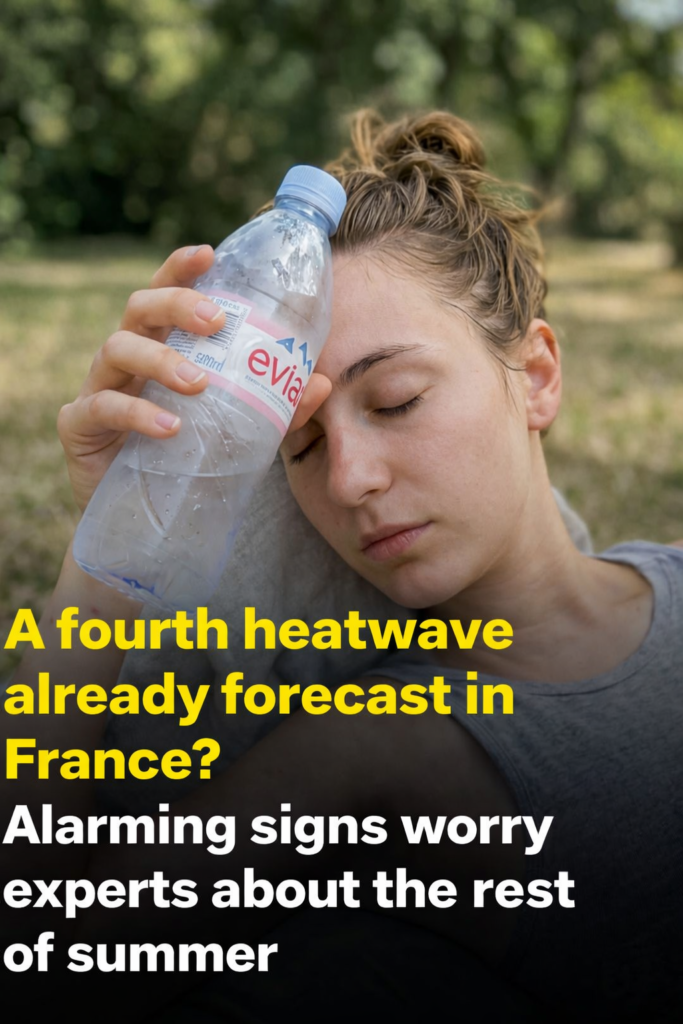
Is France Heading for a Fourth Heatwave? Climate Experts Raise the Alarm
As summer continues, many people across France are wondering whether another intense heatwave is just around the corner. After several periods of extreme temperatures already this season, new weather forecasts suggest that a fourth heatwave could develop in the coming days. While meteorologists caution that long-range forecasts can still change, the latest climate models are drawing serious attention.
A Summer Dominated by Extreme Heat
France has already endured multiple heatwaves this summer, with temperatures soaring above 95°F (35°C) in many regions and even approaching 104°F (40°C) in some areas.
These repeated episodes have strained water resources, increased energy consumption, and created difficult conditions for millions of people. Scientists say that such recurring heatwaves are becoming more common as global temperatures continue to rise.
Could Another Heatwave Be on the Way?
According to the latest weather models, a strong high-pressure system may settle over Western Europe once again. If this pattern develops as expected, France could experience:
Temperatures well above seasonal averages.
Hot, uncomfortable nights with little cooling after sunset.
Increased drought conditions across many regions.
A higher risk of wildfires due to dry vegetation and strong sunshine.
Meteorologists emphasize that forecasts several days ahead remain uncertain, but the current trend is being closely monitored.
Why Are Climate Experts Concerned?
Experts are worried not only about the possibility of another heatwave but also about how frequently these events are occurring.
Successive heatwaves can:
Dry out soils and reduce water reserves.
Increase the likelihood of forest fires.
Put extra stress on agriculture and ecosystems.
Raise health risks, especially for older adults, children, and people with chronic illnesses.
Cities are particularly vulnerable because concrete and asphalt trap heat, creating “urban heat islands” where temperatures remain high even overnight.
Health Risks During Extreme Heat
Extended periods of high temperatures can lead to:
Dehydration.
Heat exhaustion and heatstroke.
Worsening cardiovascular and respiratory conditions.
Fatigue and sleep disruption due to hot nights.
Health authorities recommend:
Drinking water regularly, even if you don’t feel thirsty.
Avoiding outdoor activities during the hottest hours.
Keeping homes cool by closing blinds and windows during the day.
Checking on elderly relatives, neighbors, and other vulnerable individuals.
Is This the New Normal?
Climate scientists have observed a clear increase in the frequency, intensity, and duration of heatwaves across Europe over the past decades.
While no single heatwave can be attributed solely to climate change, rising global temperatures are making extreme heat events more likely and more severe.
Whether this potential fourth heatwave fully develops will become clearer over the coming days. Until then, experts recommend staying informed, following weather updates, and taking precautions to stay safe during periods of extreme heat.
To provide the best experiences, we use technologies like cookies to store and/or access device information. Consenting to these technologies will allow us to process data such as browsing behavior or unique IDs on this site. Not consenting or withdrawing consent, may adversely affect certain features and functions.
Functional
Always active
The technical storage or access is strictly necessary for the legitimate purpose of enabling the use of a specific service explicitly requested by the subscriber or user, or for the sole purpose of carrying out the transmission of a communication over an electronic communications network.
Preferences
The technical storage or access is necessary for the legitimate purpose of storing preferences that are not requested by the subscriber or user.
Statistics
The technical storage or access that is used exclusively for statistical purposes.The technical storage or access that is used exclusively for anonymous statistical purposes. Without a subpoena, voluntary compliance on the part of your Internet Service Provider, or additional records from a third party, information stored or retrieved for this purpose alone cannot usually be used to identify you.
Marketing
The technical storage or access is required to create user profiles to send advertising, or to track the user on a website or across several websites for similar marketing purposes.