If you have ever cleaned prawns or shrimp, you may have noticed a dark line running along the back. Many people call it a “black vein,” but it is not actually a vein.
So, what is it—and is it safe to eat?
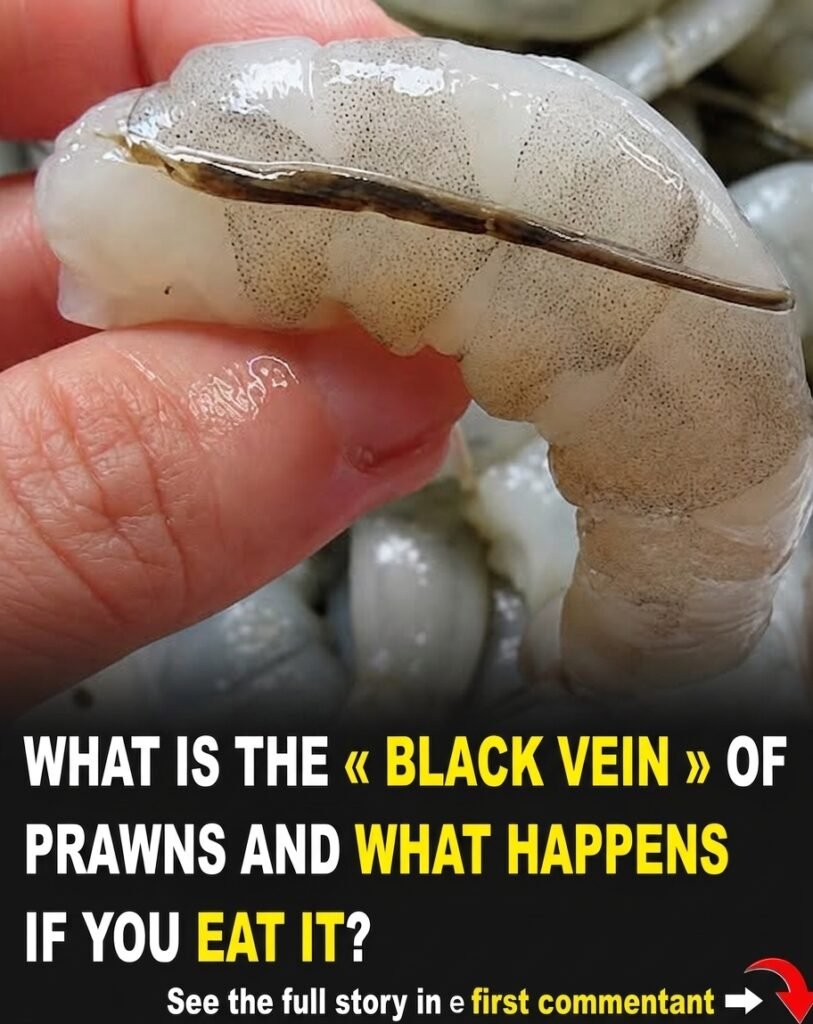
What Is the Black Line?
The dark line along the back of a prawn is its digestive tract (intestinal tract). Depending on what the prawn has recently eaten, it may appear:
- Black
- Dark brown
- Gray
- Greenish
- Almost transparent
The darker and fuller the tract is, the more noticeable it becomes.
Is It Dangerous to Eat?
In most cases, accidentally eating the digestive tract of a properly cooked prawn is not dangerous.
However, many people prefer to remove it because it can:
- Contain sand or grit
- Have an unpleasant texture
- Affect the appearance of the cooked prawn
- Sometimes have a slightly unpleasant taste
The most important food-safety issue with prawns is proper storage and thorough cooking, rather than the presence of the dark tract itself.
Should You Remove It?
Removing it is generally recommended, especially for large prawns, mainly for cleanliness and presentation.
How to Devein a Prawn
- Peel the shell if desired.
- Make a shallow cut along the back.
- Locate the dark digestive tract.
- Lift it out gently using the tip of a knife, toothpick, or your fingers.
- Rinse the prawn briefly under clean water.
- Cook immediately or keep refrigerated until cooking.
What About the Line Underneath the Prawn?
Prawns may also have another line along the underside. This is different from the digestive tract and should not automatically be confused with the so-called black vein.
The Bottom Line
The famous “black vein” is actually the prawn’s digestive tract. While many people remove it for better texture, appearance, and cleanliness, accidentally eating it after the prawn has been properly cooked is generally not a reason to panic.
When preparing seafood, always focus on freshness, proper refrigeration, avoiding cross-contamination, and thorough cooking.
⚠️ Food Safety Note
If prawns have a strong unpleasant odor, unusual sliminess, or signs of spoilage, do not eat them. When in doubt, discard questionable seafood.